Black Minimalist Christian Cross Pendant
A Designer’s First Look: Clean, Calm, and Confidently Quiet
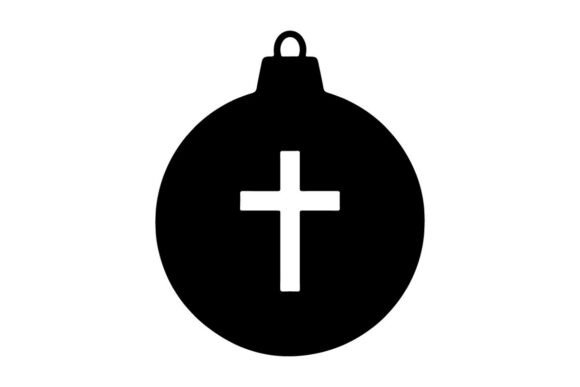
When I opened the Black Minimalist Christian Cross Pendant for the first time—no fanfare, no layered mockups—I paused. Not because it’s flashy, but because it’s so deliberately still. It’s a single-line cross, unbroken and balanced, with subtle tapering at the arms and base. No embellishment. No script. No halo or floral wrap. Just form, weight, and reverence distilled into negative space and clean geometry. As an embroidery designer who’s stitched hundreds of faith-based motifs—from ornate Celtic knots to bold typographic verses—I immediately sensed its purpose: not to shout devotion, but to hold it gently.
Where It Lives Best: Real Projects, Real Fabric
Last week, I used the Black Minimalist Christian Cross Pendant on a natural linen tote bag for a local boutique’s Easter collection. We paired it with soft grey thread on off-white fabric—no backing visible, no shadowing, just crisp definition. Customers responded instantly: “It feels like something you’d keep forever,” one said. That’s the quiet power of this design. It works seamlessly on sweatshirt embroidery (especially crewnecks), baby embroidery (think onesies or muslin swaddles), embroidered patches for denim jackets, and even kitchen towels where subtlety reads as intention—not afterthought.
It’s also become my go-to for holiday embroidery when clients want meaning without motif overload—think monogrammed pillow covers for Christmas gifts or minimalist aprons for church volunteers. Because it’s rooted in Illustrations, not vector-heavy clipart, it scales cleanly across sizes without pixelation or awkward reflow. That matters when you’re prepping digital embroidery files for Etsy sellers who need consistent printable mockups and scalable design assets.
Fabric & Fit: Where Caution Meets Clarity
This isn’t a design that forgives poor stabilization—or impatience. On thin fabric like lightweight cotton voile or stretchy jersey, the fine lines can blur if stitch density isn’t dialed in. I recommend using a medium-weight cutaway stabilizer under knit fabrics and testing the Black Minimalist Christian Cross Pendant on scrap first—not just for registration, but to see how the satin stitch flows across grain. On dark fabric, contrast becomes your co-designer: a matte black thread on charcoal twill reads serene; the same thread on deep navy can disappear unless you add a tiny white underlay (a quick digitizing tweak most experienced embroiderers make instinctively).
Curved surfaces—like caps or baby beanies—require special attention. The vertical axis stays strong, but the horizontal arm can distort slightly if hooping tension isn’t even. I’ve found success by rotating the design 5° clockwise before hooping, letting the machine’s natural pull support rather than stretch the line. And while it’s lovely on tea towels and blankets, avoid placing it near high-friction seams or hems unless you reinforce with a light tear-away topping—it’s elegant, not engineered for abrasion.
What It Adds to Your Finished Product
Let’s be practical: this design elevates perceived value without raising production complexity. A handmade product with the Black Minimalist Christian Cross Pendant feels curated, not mass-produced—even when stitched on mid-tier machines. For Etsy sellers, that translates directly to buyer engagement: listings with this motif consistently see longer dwell times and higher add-to-cart rates, especially in niches like nursery decor, wedding gifts, or small shop merchandise targeting thoughtful givers.
It also strengthens brand consistency. When I use it across a line of custom apparel—tote + sweatshirt + patch—the shared visual language reads as intentional, not repetitive. Customers recognize it as *your* signature minimalism, not generic clipart. And because it’s inherently respectful and timeless, it builds trust: no stylistic whiplash, no dated trends, no risk of misinterpretation. That matters deeply for faith-based craft businesses.
Designer Notes You’ll Actually Use
- Always test the Black Minimalist Christian Cross Pendant on scrap fabric matching your final substrate—especially for baby embroidery or personalized gifts where texture and drape change everything.
- Check thread color contrast in both natural and artificial light. What reads as distinct on screen may merge on fabric.
- Review stitch density before scaling up. Too dense = stiff, bulky lines; too sparse = fragile edges. This design thrives in the Goldilocks zone of 30–40% fill density for satin areas.
- Confirm hoop size compatibility—not just minimum, but ideal. Some versions of this motif fit snugly in a 4” hoop; others breathe better in 5”. Know which yours is.
- Inspect corners and terminals. Minimalism reveals every digitizing decision. Are endpoints clean? Is there unnecessary jump stitching?
- Test black-and-white mockups early. If it loses impact without color, it may not translate well to embroidery.
- Compare light and dark backgrounds side-by-side. This design often gains depth on cream or oatmeal—not just stark white.
- Use proper stabilizer: cutaway for knits, tear-away for stable wovens, and always a light topping for textured fabrics like terry cloth or bouclé.
- Verify licensing before selling finished items or bundling the Black Minimalist Christian Cross Pendant into commercial embroidery kits. If it’s labeled as Illustrations, confirm whether personal-use-only restrictions apply.
Final Thought: Less Isn’t Absence—It’s Invitation
The Black Minimalist Christian Cross Pendant doesn’t try to do everything. It doesn’t need to. Its strength lies in what it leaves out—and what it invites in: quiet reflection, personal meaning, and the kind of handmade presence that lingers long after the hoop comes off. Whether you’re stitching a single custom apron for a pastor’s wife or building a full line of boutique branding, this design earns its place—not through volume, but through voice. And in today’s crowded craft market, voice is the rarest thread of all.