Christian Mug Sublimation, Bible Quote
A Designer’s First Glance: Quiet Confidence, Not Clutter
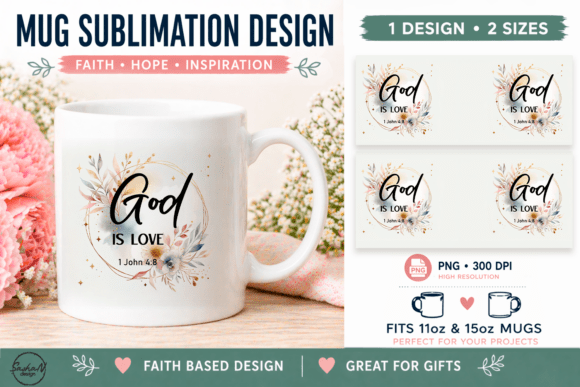
When I opened Christian Mug Sublimation, Bible Quote for the first time, what struck me wasn’t flash—it was focus. The composition feels intentionally restrained: a centered mug silhouette with clean, legible script wrapping its curve—no ornate borders, no excessive flourishes. It reads as warm but not sentimental, reverent but not stiff. That balance matters deeply when you’re translating a digital embroidery file into a tactile, handmade product. I immediately pictured it stitched onto a natural linen tea towel for a boutique kitchen line—not as a bold statement, but as a quiet anchor in someone’s daily ritual.
Where This Design Earns Its Keep (and Where It Doesn’t)
Christian Mug Sublimation, Bible Quote shines brightest on medium-to-heavyweight woven fabrics where stitch definition holds: think cotton canvas tote bags, structured aprons, or brushed cotton sweatshirts. On a recent custom order—a set of embroidered nursery pillow covers—I tested it at 3.5" wide. The mug outline held crispness with a satin stitch edge, and the scripture phrase remained legible without needing oversized lettering. Customers responded to that subtlety; one noted how “it felt personal, not preachy.” That’s the difference between decoration and resonance.
But let’s be direct: this isn’t a design for every surface. On stretchy jersey tees? Risky—without precise stabilizer pairing and careful hooping, the curved text can distort. On textured terry cloth towels? The fine lines in the mug handle and script may blur unless you reduce stitch density or adjust underlay. And on dark fabric—especially charcoal or navy—I recommend testing thread contrast early: a soft ecru or oatmeal thread reads beautifully on light backgrounds but disappears on deep tones unless you switch to cream or antique white.
Real-World Fit: From Craft Fair Table to Etsy Listing
I used Christian Mug Sublimation, Bible Quote as the centerpiece for a small-batch holiday collection: embroidered ceramic mugs (yes—sublimated *and* stitched around the rim), matching oven mitts, and linen napkins. The design scaled cleanly from 2.75" on the napkin hem to 4.25" on the mitt. As an Etsy seller, I appreciated how easily it integrated into printable mockups—the clean lines translated well across light/dark fabric previews, helping buyers visualize it before purchase. No pixelation, no jagged edges in the vector-based preview. That builds trust fast.
It also works quietly well for baby embroidery: stitched on a muslin swaddle blanket or a gauzy bib, the gentle theme reads as comforting—not clinical or overly literal. But here’s the caveat: if you’re planning to use it on preemie-sized onesies or tiny cap brims, check the smallest letter height. Some versions of this design include delicate serifs or tight kerning that won’t resolve cleanly below 2". Always test on scrap first—and yes, even if your machine handles 1.8mm text flawlessly, your fabric and stabilizer combo might not.
What This Design Says About Your Brand—Without Saying a Word
Your choice of embroidery design shapes perception faster than any product description. Christian Mug Sublimation, Bible Quote signals intentionality: it doesn’t shout doctrine; it invites reflection. For craft businesses building a cohesive aesthetic—say, a faith-based home goods shop or a curated gift boutique—it supports brand consistency without locking you into rigid themes. You can pair it with neutral linens, hand-dyed cottons, or minimalist ceramics and it feels like part of the same visual language.
That cohesion boosts giftability. A customer buying a personalized embroidered tote bag with this design isn’t just purchasing utility—they’re choosing something that feels thoughtfully made, spiritually grounded, and aesthetically resolved. That perception elevates perceived value, especially in markets where handmade product pricing competes with mass-produced alternatives.
Practical Notes Every Embroidery Designer Should Run Through
- Test on scrap fabric first—especially if using textured weaves or blends. Watch how the mug’s curved base settles over seams or hems.
- Review stitch density: High-density fill areas (like the mug’s interior shadow) may need reduced density on lightweight fabrics to avoid stiffness.
- Confirm hoop size compatibility: If your standard hoop is 4"x4", verify the full design fits comfortably—not just technically, but with breathing room for smooth hooping.
- Inspect small details: Zoom in on the scripture’s terminal letters and mug handle join points. Are they digitized with clean jump stitches? Or do they risk nesting and thread buildup?
- Test black-and-white mockups: This design relies on shape + message. If it reads clearly in grayscale, it’ll hold up across varied fabric colors and lighting conditions.
- Use appropriate stabilizer: Tear-away works well on stable cottons; cut-away adds needed support for knits or layered garments like reversible aprons.
- Verify licensing terms before selling finished items or bundling the embroidery file as part of a digital product. Crafts category listings don’t automatically grant commercial rights—always double-check.
Final Thought: It’s Not Just a Mug—It’s a Moment
As a designer who’s stitched hundreds of Bible-themed pieces—from bold cross appliqués to delicate Psalms in cursive—I keep returning to designs like Christian Mug Sublimation, Bible Quote because they respect the weight of the message *and* the craft. They don’t overpromise. They don’t overfill. They leave space—for the fabric, the stitch, and the person holding the finished product. Whether you’re embroidering a holiday gift for a pastor, stocking a small shop with meaningful merchandise, or building a digital embroidery file library for Etsy sellers, this design earns its place by being both simple and substantial. Just remember: simplicity in embroidery isn’t about less work—it’s about more intention.