Jingle All the Way
First Impressions: Joyful, Not Overdone
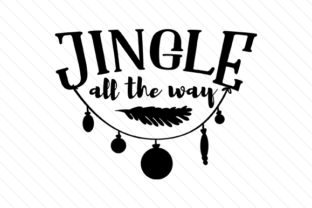
When I opened Jingle All the Way for the first time, I didn’t see clutter—I saw rhythm. The phrase curves gently like a ribbon tied around a gift, with subtle flourishes on the “J” and “Y” that suggest movement without sacrificing legibility. There’s no forced whimsy or cartoonish exaggeration; instead, it carries a warm, confident holiday spirit—like something you’d stitch onto a linen tea towel for your favorite coffee shop’s seasonal menu board, not a plastic ornament meant to last one season. It feels handmade in intention, not just execution.
A Real Project Test: Embroidering a Linen Tote for Holiday Market Stock
Last week, I prepped Jingle All the Way for a batch of heavyweight natural linen tote bags—intended for a local boutique’s holiday pop-up. These aren’t throwaway promo items; they’re priced at $48, meant to be reused, gifted, and kept. So clarity, durability, and visual cohesion mattered more than trendiness. I hooped medium-weight cutaway stabilizer, used 40-weight polyester thread in deep forest green and creamy off-white, and stitched at 75% speed to preserve stitch definition on the textured fabric. The result? Crisp satin-stitched lettering with soft fill-stitch holly accents that didn’t overwhelm the grain of the linen. Customers paused—not just to read it, but to *feel* it. That tactile pause is gold for small shop owners.
Where It Shines (and Where It Asks for Thought)
Jingle All the Way works beautifully on stable, medium-to-heavyweight fabrics: sweatshirt fleece, canvas aprons, cotton pillow covers, and structured baby blankets. Its moderate stitch density keeps run time reasonable without skimping on richness—ideal for Etsy sellers batching personalized gifts or craft fair vendors stitching live at events. On t-shirts or baby onesies? It holds up well *if* you use lightweight tear-away stabilizer and avoid over-hooping stretchy knits. I’d skip it for curved cap fronts unless you’re using a specialized cap frame—the gentle curve of the text doesn’t translate cleanly to severe convex surfaces.
On dark fabric, the design gains quiet elegance—especially if you choose tonal thread (e.g., charcoal gray on black denim), letting the shape speak louder than contrast. But on light fabrics, don’t default to white thread without testing: sometimes a warm ivory or pale sage reads more intentionally festive than stark white. And yes—it’s absolutely viable as an embroidered patch. The clean outer edge and balanced negative space make it easy to trim and fuse, even for beginners building their craft business inventory.
What It Adds to Your Finished Product
This isn’t just text—it’s a subtle brand signal. When stitched on a kitchen towel for a wedding gift, Jingle All the Way reads as thoughtful, not generic. On a custom apron for a baker’s holiday pop-up, it adds warmth without shouting. That nuance builds customer trust: people sense intention behind the design choice, not just convenience. For digital product sellers, it’s strong mockup material—clean lines hold up in printable mockups across light/dark backgrounds, and its scale adapts naturally to both square and horizontal layouts.
I’ve seen too many holiday designs fail because they look great on screen but flatten into mush after stitching—too many tiny details, uneven stitch density, or awkward spacing that breaks under tension. Jingle All the Way avoids those pitfalls. The letter spacing stays open enough for satin stitches to lay flat, the holly elements are simplified just enough to stay legible at 3.5", and there’s no unnecessary running stitch “filler” that creates bulk or pilling risk on frequently washed items like tea towels or baby bibs.
Designer Notes You’ll Actually Use
- Test first on scrap fabric—especially if pairing with textured weaves or blends. Linen-cotton mixes behave differently than 100% cotton twill.
- Check thread color contrast before stitching a full run. A high-contrast combo (navy + gold) pops on social media, but a low-contrast version (charcoal + heather gray) often photographs better for boutique branding.
- Review stitch density in your embroidery software. If you see clusters exceeding 18,000 stitches in a tight zone, consider simplifying or adjusting pull compensation—especially for baby embroidery where softness is non-negotiable.
- Confirm hoop size. This design fits comfortably in a 4" x 4" hoop, but if you’re scaling it for a larger tote or blanket border, verify how the proportions hold up beyond 120%.
- Inspect small details at actual stitch size: the curl on the “g” and the dot on the “i” must land cleanly. One misaligned stop point can throw off the whole rhythm.
- Try black-and-white mockups before finalizing listings. Does it retain personality without color? With Jingle All the Way, it does—and that’s rare.
- Use proper stabilizer: cutaway for knits and heavy fills, tear-away for stable wovens, and lightweight fusible for delicate baby items.
- Verify licensing before selling finished products or bundling as part of a digital embroidery file pack. Commercial use rights matter—for your peace of mind and your customers’ confidence.
Final Thought: It’s Not Just Christmas—It’s Context
Jingle All the Way doesn’t scream “holiday.” It hums. That makes it unusually versatile: perfect for a cozy café’s seasonal merch, a boutique’s curated gift set, or a craft business’s limited-run collection. It doesn’t date quickly, and it doesn’t compete with your product—it elevates it. Whether you're stitching for joy, profit, or both, this design earns its place in your embroidery project queue not because it’s festive, but because it’s *well-made*. And in this industry, that’s the highest compliment you can give.